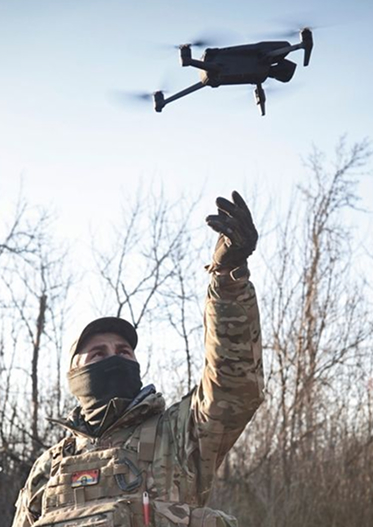
Operational test, doctrine, and localization for drone programs facing real battlefield conditions
Frontline R&D helps allied governments, OEMs, test authorities, and rapid adoption programs evaluate unmanned and counter-unmanned systems against Ukraine-level battlefield stress — then translate findings into doctrine, training, and compliant production pathways.
For ministries, OEMs, test authorities, and rapid adoption programs.
WHAT WE do
1
Operational Test & Evaluation
Battlefield-relevant 90-day test campaigns for UAS, interceptors, and counter-UAS systems.
- Scored report
- Survivability assessment
- Operator burden analysis
- Go / Conditional Go / No-Go recommendation
Positioned as a neutral red‑team evaluator, not a competing OEM.
Doctrine & Training
Frontline lessons translated into usable doctrine, TTPs, curricula, and training support.
- doctrine packages
- instructor support
- operator/engineer exchange models
2
3
Localization & Production Pathways
Combat-proven design pathways adapted to national, allied, and partner-nation industrial and regulatory requirements.
- component substitution plans
- test protocols
- factory-readiness checklists
Operational Trend Monitoring
Recurring updates on EW evolution, countermeasures, and operational change between test cycles.
- briefings
- short written updates
- requirement implications
+
Structured for allied compliance

Service and advisory provider, not a weapons exporter

Respect for Ukrainian, EU, and partner-nation export-control frameworks
Anonymized operational data and protected client information

Clear separation of test activity from combat operations
Why buyers trust this model
FRONTLINE ACCESS, STANDARDIZED SCORING, COMPLIANT LOCALIZATION
Grounded in a high-tempo operating environment where EW, tactics, and countermeasures evolve quickly.
90-day cycles with defined metrics and decision-oriented outputs, not anecdotal battlefield impressions.
A service and advisory role designed to support governments, OEMs, and national industry rather than replace them.
Built to support sovereign production paths under EU, SAFE, Buy-American, and allied regulatory constraints.
Who we help:
For Allied Government & Ministries
We support ministries, defense agencies, innovation units, and national security institutions seeking practical ways to evaluate, adopt, train, and localize emerging UAS and counter-UAS capabilities.
For OEMs & Integrators
We help companies understand how systems perform under Ukraine-informed operational conditions and translate findings into design, training, sustainment, and localization recommendations.
For Test & Evaluation Authorities
We support structured test design, operationally relevant criteria, after-action reporting, and evaluation frameworks that reflect the realities of modern drone warfare.
For Innovation Units and Rapid Adoption Programs
We help accelerators, rapid adoption programs, and innovation offices connect promising technology to field-informed evaluation, doctrine, and procurement-relevant outputs.
For Eastern Flank & Indo-Pacific Partners
We support allies facing drone, EW, infrastructure, border, maritime, and territorial-defense challenges by translating Ukrainian lessons into adaptable national capability pathways.
Why it’s needed:
Systems built for demonstrations are failing under battlefield stress

High-end Western systems that excel in domestic trials suffer critical mission failure rates under Ukrainian-level electronic warfare.

Multi-million-dollar platforms are lost in early tests and deployments, with no structured feedback loop back into design.

A single loitering munition can cost tens of thousands, yet still under-perform against improvised FPV drones costing a few hundred dollars.
Understanding the problem:
THE 90-DAY ADAPTATION GAP
The battlefield changes every 90 days. Procurement doesn’t.

On the Ukrainian front, tactics, firmware, EW, and TTPs turn over roughly every 90 days. Traditional acquisition and test cycles are measured in years, not weeks, so static designs are often obsolete before they’re even fielded. Without a continuous frontline test and learning loop, allies risk buying drones for the war that ended last quarter, not the one unfolding now.
How we work
Engagements are modular. Clients may use one stage or the full sequence.
1
Scope and evaluate
We define the system, scenario, and decision to be made, then run a structured OT&E campaign designed around battlefield-relevant conditions.
- Scored report
- Survivability observations
- Operator-burden findings
- Go / Conditional Go / No-Go recommendation
2
Translate lessons into force development
We turn test results and frontline patterns into usable doctrine, TTPs, training materials, and operator or engineer support formats that fit your institution.
- Doctrine notes
- Curricula
- Training support
- Force-employment recommendations
3
Build a compliant path to fielding
Where relevant, we help convert validated lessons and architectures into localization and production pathways aligned with national industry and allied compliance requirements.
- Localization playbooks
- Substitution pathways
- Test protocols
- Factory-readiness inputs
governance & security
Designed for compliance, security, and trust
We operate under official agreements with Ukrainian partners and, where relevant, allied authorities, respecting Ukrainian, EU, and partner-nation export control rules. Our contracts and structures make clear that we are a service and advisory provider, not a direct exporter of weapons. We anonymize operational data, separate client prototypes from in-house designs, and keep a strict boundary between combat missions and test campaigns.
Activities of our personnel are limited to evaluation, training, and advisory functions and do not involve operational control or targeting.
Let’s make your program ready for the war of tomorrow
Whether you are scaling a national drone wall, fielding a new interceptor, or building an AI-enabled UAS, we can help you understand how it actually performs under Ukraine-level stress – and how to turn that knowledge into doctrine and sovereign production.
Common questions from government, industry, and test partners
No. Frontline R&D is not a competing OEM, broker, or prime contractor. We operate as a service, evaluation, doctrine, and localization partner, helping governments, OEMs, and test authorities assess systems against current battlefield conditions and turn findings into capability decisions.
No. Frontline R&D is a service and advisory provider. We do not operate as a weapons exporter, mercenary force, or combat unit. Our role is limited to structured evaluation, training, doctrine support, and localization planning within defined legal and operational boundaries.
Yes. Frontline R&D works through formal agreements, defined scopes of work, and clear boundaries between test activity, advisory support, and combat operations. Engagements are structured to respect applicable Ukrainian, EU, and partner-nation legal and export-control frameworks.
Security and discretion are built into the model. Engagements are conducted through controlled partner relationships, defined handling procedures, and clear separation between client-sensitive information, operational observations, and proprietary designs.
No. Frontline R&D is designed to support client systems, vendors, and national industry, not replace them. Our role is to help buyers and suppliers generate better evidence, doctrine, and localization pathways.
Yes. Engagements are built around defined operational questions, structured evaluation methods, and concrete outputs. Depending on scope, clients may receive scored reports, survivability observations, operator-burden findings, doctrine implications, localization recommendations, and Go / Conditional Go / No-Go decision support.
Yes. Frontline R&D helps translate combat-relevant lessons into pathways that fit national industrial, regulatory, and procurement environments, including allied compliance constraints, localization requirements, and sovereign production goals where relevant.
Yes. A core part of the model is helping clients adapt validated designs, lessons, and architectures into compliant local production pathways, including substitution planning, localization playbooks, test protocols, and factory-readiness inputs where relevant.
Outputs depend on the engagement, but typically include scored OT&E reports, survivability and operator-burden assessments, doctrine and training materials, localization pathways, test protocols, executive briefings, and recurring updates tied to changes in drone warfare, EW, and countermeasure conditions.
Yes. Frontline R&D supports both public-sector and industry use cases. Governments may use it to inform capability development, doctrine, and localization planning, while OEMs and integrators may use it to validate systems, understand battlefield performance constraints, and prepare for compliant deployment or production pathways.